

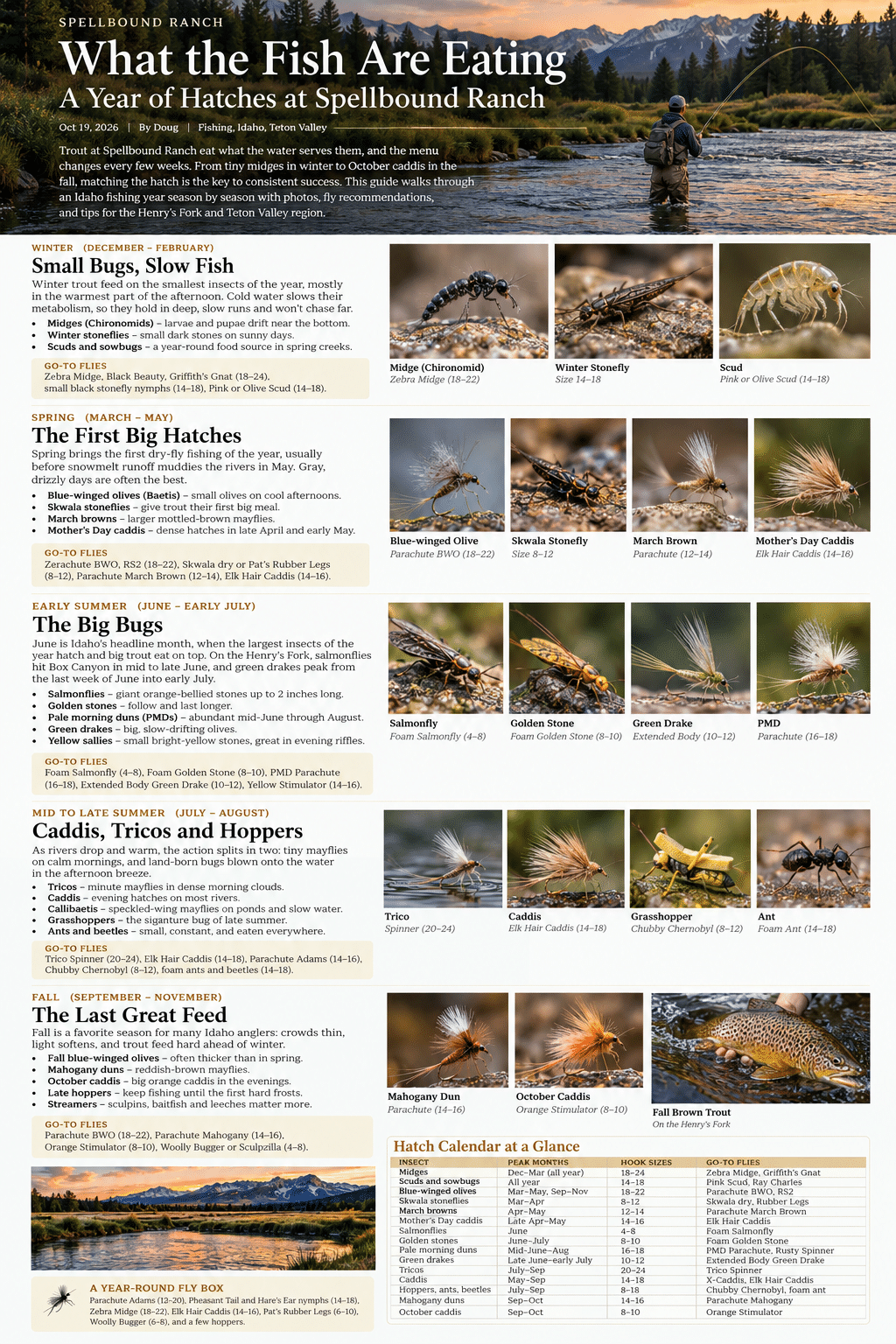
Trout at Spellbound Ranch eat what the water serves them, and the menu changes every few weeks. From tiny midges in winter to October caddis in the fall, matching the hatch is the key to consistent success. This guide walks through an Idaho fishing year season by season, with fly recommendations and tips for the South Fork, the Henry’s Fork and the Teton Valley region.
Winter (December – February): Small Bugs, Slow Fish
Winter trout feed on the smallest insects of the year, mostly in the warmest part of the afternoon. Cold water slows their metabolism, so they hold in deep, slow runs and won’t chase far.
- Midges (Chironomids) – larvae and pupae drift near the bottom.
- Winter stoneflies – small dark stones on sunny days.
- Scuds and sowbugs – a year-round food source in spring creeks.
Go-to flies: Zebra Midge, Black Beauty, Griffith’s Gnat (18–24), small black stonefly nymphs (14–18), Pink or Olive Scud (14–18).
Spring (March – May): The First Big Hatches
Spring brings the first dry-fly fishing of the year, usually before snowmelt runoff muddies the rivers in May. Gray, drizzly days are often the best.
- Blue-winged olives (Baetis) – small olives on cool afternoons.
- Skwala stoneflies – give trout their first big meal.
- March browns – larger mottled-brown mayflies.
- Mother’s Day caddis – dense hatches in late April and early May.
Go-to flies: Zerachute BWO, RS2 (18–22), Skwala dry or Pat’s Rubber Legs (8–12), Parachute March Brown (12–14), Elk Hair Caddis (14–16).
Early Summer (June – Early July): The Big Bugs
June is Idaho’s headline month, when the largest insects of the year hatch and big trout eat on top. On the Henry’s Fork, salmonflies hit Box Canyon in mid to late June, and green drakes peak from the last week of June into early July.
- Salmonflies – giant orange-bellied stones up to 2 inches long.
- Golden stones – follow and last longer.
- Pale morning duns (PMDs) – abundant mid-June through August.
- Green drakes – big, slow-drifting olives.
- Yellow sallies – small bright-yellow stones, great in evening riffles.
Go-to flies: Foam Salmonfly (4–8), Foam Golden Stone (8–10), PMD Parachute (16–18), Extended Body Green Drake (10–12), Yellow Stimulator (14–16).
Mid to Late Summer (July – August): Caddis, Tricos and Hoppers
As rivers drop and warm, the action splits in two: tiny mayflies on calm mornings, and land-born bugs blown onto the water in the afternoon breeze.
- Tricos – minute mayflies in dense morning clouds.
- Caddis – evening hatches on most rivers.
- Callibaetis – speckled-wing mayflies on ponds and slow water.
- Grasshoppers – the signature bug of late summer.
- Ants and beetles – small, constant, and eaten everywhere.
Go-to flies: Trico Spinner (20–24), Elk Hair Caddis (14–18), Parachute Adams (14–16), Chubby Chernobyl (8–12), foam ants and beetles (14–18).
Fall (September – November): The Last Great Feed
Fall is a favorite season for many Idaho anglers: crowds thin, light softens, and trout feed hard ahead of winter.
- Fall blue-winged olives – often thicker than in spring.
- Mahogany duns – reddish-brown mayflies.
- October caddis – big orange caddis in the evenings.
- Late hoppers – keep fishing until the first hard frosts.
- Streamers – sculpins, baitfish and leeches matter more.
Go-to flies: Parachute BWO (18–22), Parachute Mahogany (14–16), Orange Stimulator (8–10), Woolly Bugger or Sculpzilla (4–8).
A Year-Round Fly Box
If you only pack one box, fill it with Parachute Adams (12–20), Pheasant Tail and Hare’s Ear nymphs (14–18), Zebra Midge (18–22), Elk Hair Caddis (14–16), Pat’s Rubber Legs (6–10), Woolly Bugger (6–8), and a few hoppers. Check the hatch calendar in the infographic above for peak months and hook sizes for each insect.
Come Fish With Us
The best way to learn what the fish are eating is to spend a few days on the water. Stay with us at Spellbound Ranch, and you can be wading or floating within minutes — then come back to the house to tie up tomorrow’s flies.