

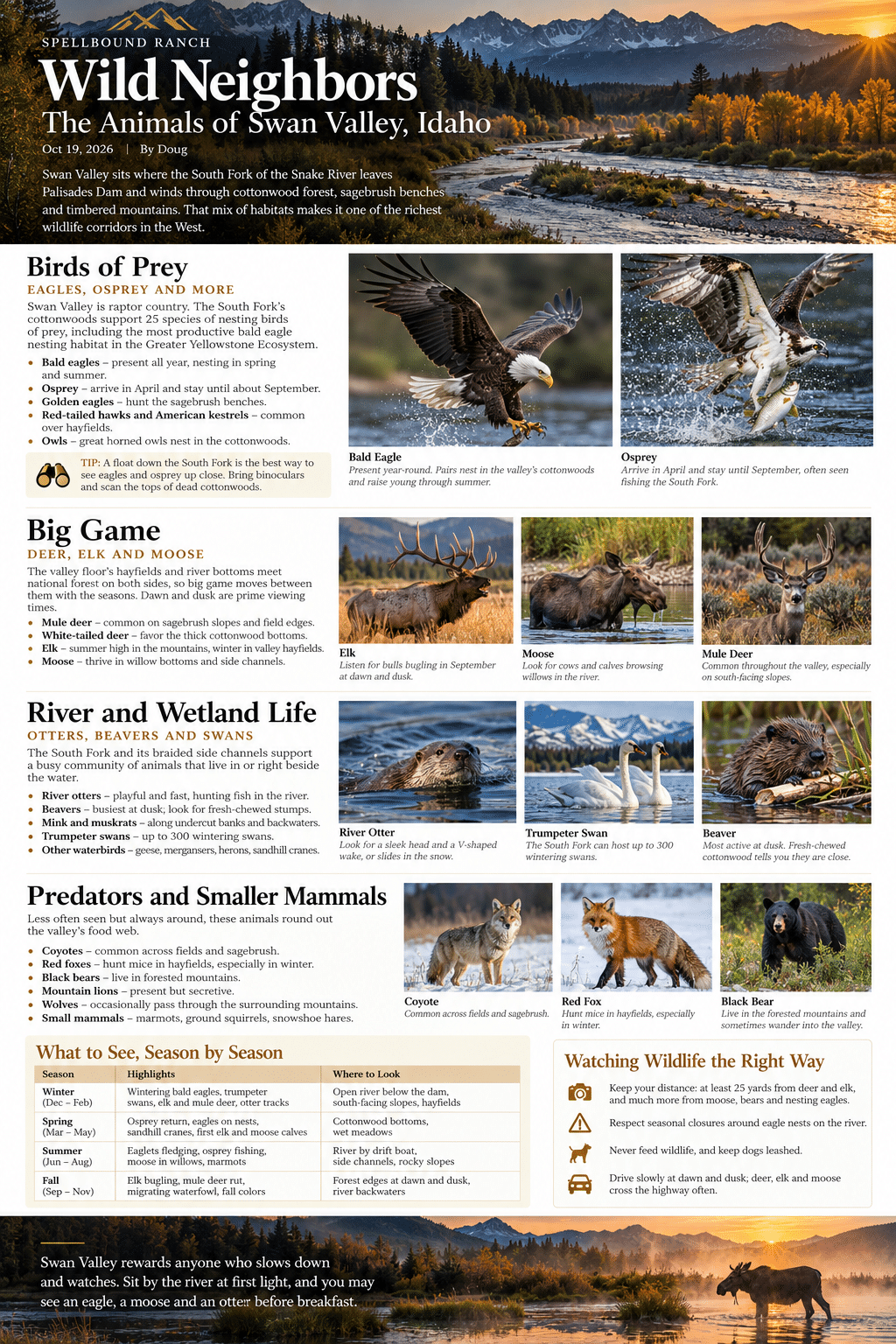
Swan Valley sits where the South Fork of the Snake River leaves Palisades Dam and winds through cottonwood forest, sagebrush benches and timbered mountains. That mix of habitats makes it one of the richest wildlife corridors in the West — and from our place on the river, you don’t have to go far to see it.
Birds of Prey: Eagles, Osprey and More
Swan Valley is raptor country. The South Fork’s cottonwoods support 25 species of nesting birds of prey, including the most productive bald eagle nesting habitat in the Greater Yellowstone Ecosystem.
- Bald eagles — present all year, nesting in spring and raising young through summer.
- Osprey — arrive in April and stay until about September, often seen fishing the South Fork.
- Golden eagles — hunt the sagebrush benches.
- Red-tailed hawks and American kestrels — common over the hayfields.
- Owls — great horned owls nest in the cottonwoods.
Tip: A float down the South Fork is the best way to see eagles and osprey up close. Bring binoculars and scan the tops of dead cottonwoods.
Big Game: Deer, Elk and Moose
The valley floor’s hayfields and river bottoms meet national forest on both sides, so big game moves between them with the seasons. Dawn and dusk are prime viewing times.
- Mule deer — common on sagebrush slopes and field edges, especially on south-facing slopes.
- White-tailed deer — favor the thick cottonwood bottoms.
- Elk — summer high in the mountains and winter in the valley hayfields. Listen for bulls bugling in September at dawn and dusk.
- Moose — thrive in willow bottoms and side channels. Look for cows and calves browsing willows in the river.
River and Wetland Life: Otters, Beavers and Swans
The South Fork and its braided side channels support a busy community of animals that live in or right beside the water.
- River otters — playful and fast, hunting fish in the river. Look for a sleek head and a V-shaped wake, or slides in the snow.
- Beavers — busiest at dusk. Fresh-chewed cottonwood tells you they’re close.
- Mink and muskrats — along undercut banks and backwaters.
- Trumpeter swans — the South Fork can host up to 300 wintering swans.
- Other waterbirds — geese, mergansers, herons and sandhill cranes.
Predators and Smaller Mammals
Less often seen but always around, these animals round out the valley’s food web.
- Coyotes — common across fields and sagebrush.
- Red foxes — hunt mice in the hayfields, especially in winter.
- Black bears — live in the forested mountains and sometimes wander into the valley.
- Mountain lions — present but secretive.
- Wolves — occasionally pass through the surrounding mountains.
- Small mammals — marmots, ground squirrels and snowshoe hares.
What to See, Season by Season
| Season | Highlights | Where to look |
|---|---|---|
| Winter (Dec – Feb) | Wintering bald eagles, trumpeter swans, elk and mule deer, otter tracks | Open river below the dam, south-facing slopes, hayfields |
| Spring (Mar – May) | Osprey return, eagles on nests, sandhill cranes, first elk and moose calves | Cottonwood bottoms, wet meadows |
| Summer (Jun – Aug) | Eaglets fledging, osprey fishing, moose in willows, marmots | River by drift boat, side channels, rocky slopes |
| Fall (Sep – Nov) | Elk bugling, mule deer rut, migrating waterfowl, fall colors | Forest edges at dawn and dusk, river backwaters |
Watching Wildlife the Right Way
- Keep your distance. Stay at least 25 yards from deer and elk, and much more from moose, bears and nesting eagles.
- Respect closures. Honor seasonal closures around eagle nests on the river.
- Never feed wildlife, and keep dogs leashed.
- Drive slowly at dawn and dusk. Deer, elk and moose cross the highway often.
Slow Down and Watch
Swan Valley rewards anyone who slows down and watches. Sit by the river at first light, and you may see an eagle, a moose and an otter before breakfast — then come back to the house for coffee on the deck.